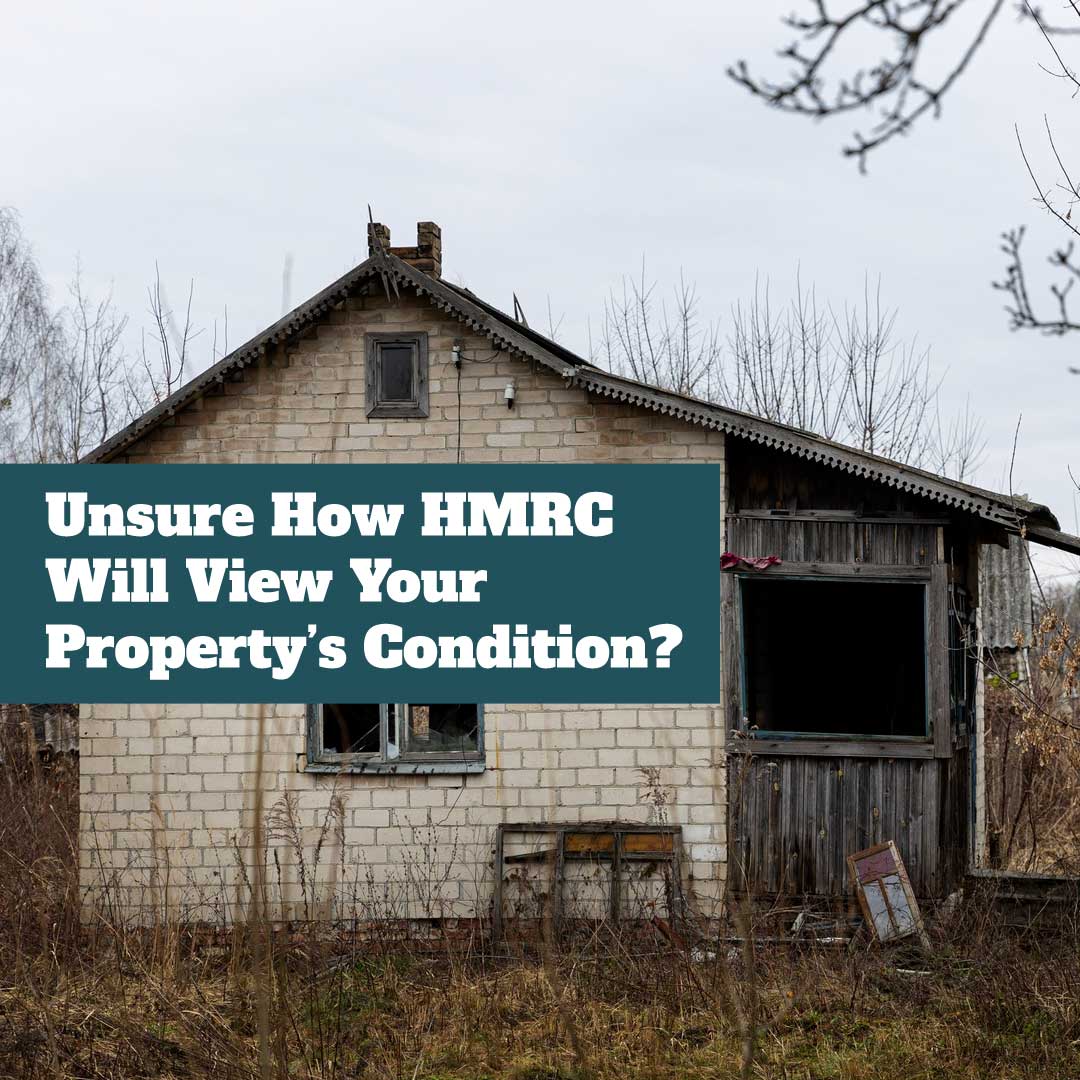
Derelict or Uninhabitable Property SDLT

Specialist SDLT Advice for Derelict / Uninhabitable Property

Assessing Stamp Duty Land Tax on damaged, severely dilapidated, or structurally compromised property requires rigorous fact-finding and technical tax analysis. If you are purchasing, or have recently completed on, a property that was not physically capable of functioning as a dwelling on the effective date of transaction, standard residential SDLT rates may not reflect the legal reality.

HeirPlan provides formal, evidence-led SDLT assessments for buyers, property investors, developers, and legal advisers facing complex property condition issues.

Derelict / Uninhabitable Property SDLT Experts

The Problem: Complex Rules & Aggressive Reclaims

Determining the correct SDLT framework for a residential building in severe disrepair is one of the most heavily scrutinised areas of UK property tax.

Conveyancers routinely apply standard residential SDLT rates based on previous land registry descriptions or historical use. Conversely, adopting an unsupported non-residential position or submitting a retrospective refund claim based on a superficial “uninhabitable” label exposes the buyer to severe HMRC enquiry risk, interest, and penalties.


    Get in touch

    You may need specialist technical review if the property exhibits:

    • Severe structural failure, such as compromised load-bearing walls, subsidence, or partial collapse.
    • Fundamental contamination or environmental hazards, such as dangerous asbestos requiring immediate full abatement before any physical entry.
    • Complete absence or destruction of primary services and sanitation infrastructure that cannot be remedied by simple repairs.
    • Substantial stripping out, where structural elements, floors, ceiling joists, or primary services were removed prior to completion.
    • Incomplete construction or major structural reconstruction where the building lacks the basic physical capabilities of a residence.
    SDLT Advice for Derelict / Uninhabitable Property

    The Statutory Test & Evolving Case Law

    A common misconception among buyers is that any property needing extensive renovation or deemed “unmortgageable” automatically qualifies for non-residential SDLT rates or a tax refund. Terms like “uninhabitable,” “derelict,” or “unfit for mortgage purposes” are commercial descriptions they carry no statutory weight.

    Under Section 116 of the Finance Act 2003 (and Schedule 4ZA for higher rates transactions), the statutory definition of residential property centers on whether a building is “used or suitable for use as a single dwelling.”

    The judicial interpretation of “suitability for use” has evolved significantly through key First-tier Tribunal (FTT) and appellate decisions:

    P N Bewley Ltd v HMRC [2019] UKFTT 65 (TC): Established the foundation that a building containing severe structural defects (such as toxic asbestos and broken heating/plumbing) that prevented immediate safe occupation was not “suitable for use as a dwelling” at completion, making it non-residential.

    Mudan v HMRC [2025] EWCA Civ 799: The Court of Appeal set a significantly higher bar for taxpayers. The court affirmed that suitability must be judged strictly at the effective date based on actual physical attributes, confirming that disrepair requiring repair or renovation does not displace residential status a question of degree that rejected the taxpayers’ claim for a severely vandalised property.

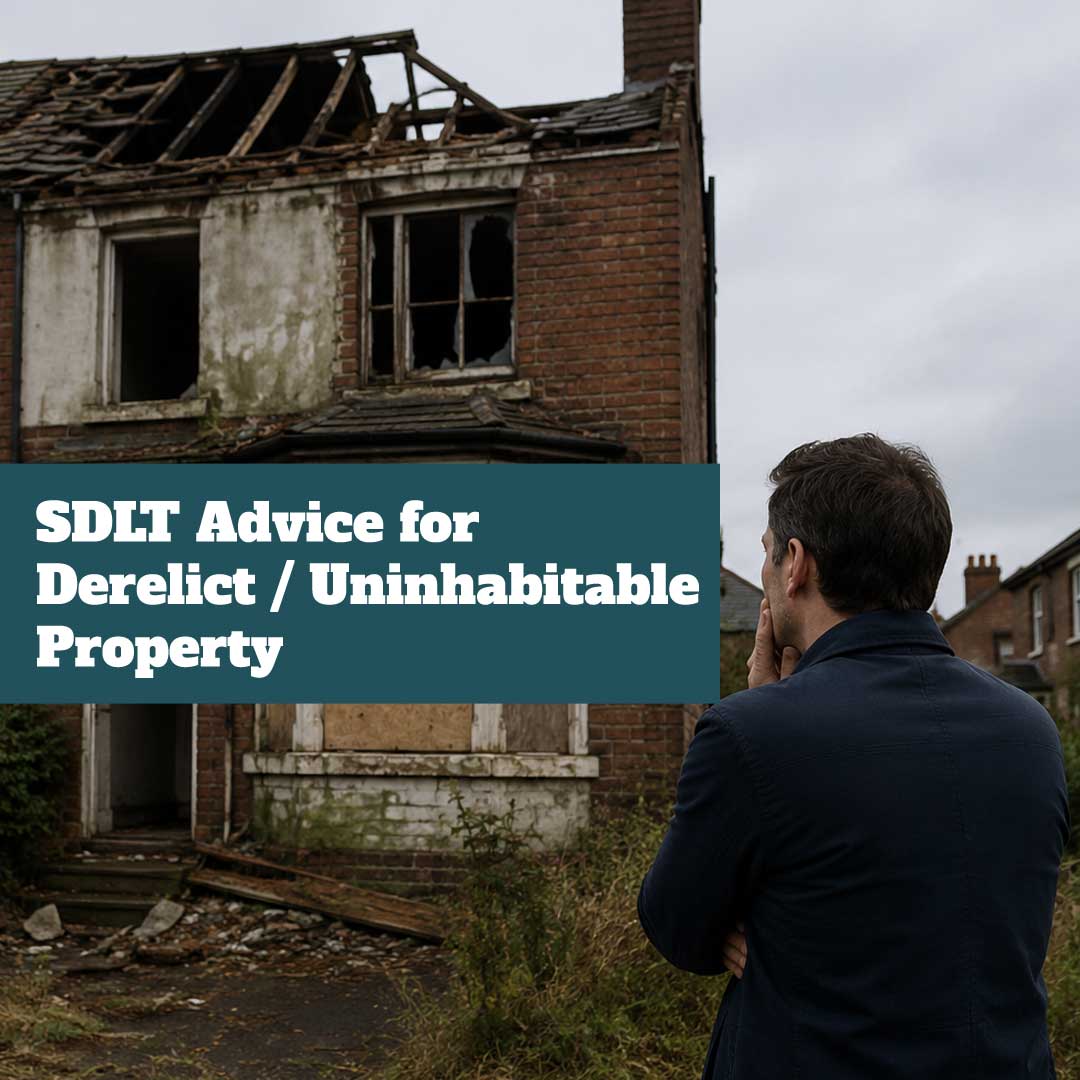
     

    Henderson Acquisitions Ltd v HMRC [2023] UKFTT 739 (TC) & Davis & Guilbert v HMRC: Upheld non-residential status where extreme structural failure, missing structural floors, and hazardous conditions rendered the premises genuinely unoccupiable without major rebuilding.

    Fish Homes Ltd v HMRC [2020] UKFTT 180 (TC): Confirmed that major cladding defects and serious fire safety risks did not prevent a flat from being treated as a dwelling, illustrating that safety defects alone do not automatically change tax status.

    Oakwood Great Oak Ltd v HMRC [2026]: Demonstrated how tribunal principles apply post-Mudan, showing that taxpayers can successfully establish non-residential treatment where contemporaneous evidence demonstrates fundamental physical incapacity at the exact transaction date.

    Uninhabitable Property SDLT

    Distinguishing Refurbishment from Fundamental Impairment

    The distinction rests on objective physical capability on the day of completion, not cosmetic appearance, commercial inconvenience, or post-completion plans.

    Feature Routine Disrepair / Modernisation Fundamental Physical Impairment
    Physical Condition Outdated services, missing boilers, broken kitchen/bathroom fittings, damp. Structural collapse, missing structural floors/roof, toxic hazard requiring full abatement.
    Work Required Replacement, repair, or internal overhaul. Structural engineering, structural rebuilding, major remediation.
    Case Law Benchmark Fails the high bar set in Mudan v HMRC. Meets the standard illustrated in Bewley, Henderson Acquisitions, and Oakwood Great Oak.
    SDLT Treatment Standard Residential Rates apply. May warrant non-residential or alternative SDLT classification.
    Derelict Property SDLT

    What We Review in a Technical Assessment

    HeirPlan reviews the physical reality of the building strictly as it existed on the effective date of transaction. We analyse:

    • Structural Integrity: Independent structural engineering reports detailing load-bearing failure, structural movement, or immediate collapse risk.
    • Primary Utility & Sanitation: Physical presence and operational capability of utility supplies, drainage, and basic sanitation infrastructure.
    • Contemporaneous Visual Evidence: Date-stamped high-resolution photographs and video logs captured immediately prior to or at completion.
    • Professional Surveys: RICS building surveys, environmental health notices, and hazardous material reports.
    • Contractor Tenders: Detailed scopes of work, structural repair estimates, and architectural reconstruction plans.
    • Planning & Legal Records: Local authority dangerous structure notices, planning permissions, auction particulars, and sale contracts.
    hmrc derelict property review

    Contemporaneous Evidence Matters

    HMRC scrutinises condition-based SDLT refunds & returns carefully. Submitting claims based solely on estate agent blurbs or retrospective assertions carries high risk.

    The viability of any SDLT analysis depends on evidence created at or around the transaction date. Once demolition or refurbishment works commence, proving the pre-acquisition physical condition becomes exceptionally difficult.

    If you are negotiating a transaction, securing structural reports and photographic proof prior to starting work on site is essential to establishing a defensible position.


    Reviewing Completed Purchases

    If you completed a transaction within the statutory amendment window (typically up to 12 months from the filing date) and paid standard residential SDLT, we can evaluate whether the position warrants review.

    We conduct an objective technical appraisal. If the evidence shows the building was merely a refurbishment project under the Mudan standard, we will state that directly. Where the facts and contemporaneous evidence support a technical reclassification, we draft formal, fully disclosed submissions grounded in statutory provisions and relevant tribunal precedents.

    Loan Trust

    Uninhabitable SDLT Advice Prior to Completion

    For prospective buyers, obtaining specialist tax input prior to exchange enables precise SDLT budgeting and ensures correct evidence gathering.

    We work alongside your existing conveyancers and solicitors to provide the specialist sdlt advice and tax analysis required for unusual properties. This ensures the initial return is filed accurately, mitigating future HMRC enquiry exposure.

    Why HeirPlan?

    • Fact-Based & Evidence-Led: We avoid speculative claims. Every file undergoes formal technical review against current legislation and case law.
    • Current Legal Precedents: Our analysis incorporates appellate authority including Mudan and recent FTT decisions such as Oakwood Great Oak.
    • HMRC Enquiry Defense: We prepare fully disclosed, technically sound filings designed to withstand rigorous HMRC review.
    • Unambiguous Guidance: You receive clear written advice detailing whether an alternative SDLT position is defensible, complete with a detailed risk assessment.

    How the Process Works

    • Initial Submission: Provide transaction details, completion date, purchase price, and initial property reports.
    • Preliminary Triage: We determine whether the physical state of the building justifies a full technical appraisal.
    • Evidence Review: We evaluate surveyor reports, structural documentation, contractor tenders, and photographic logs.
    • Written Technical Advice: We deliver a formal advice document detailing statutory position, applicable case law, and evidence strength.
    • Filing & Representation: Where supported by facts, we handle initial filings or formal amendments directly with HMRC.

    Don’t Rely on “Uninhabitable” Labels. Get a Fact-Based SDLT Assessment

    We provide clear, unambiguous, and legally grounded advice on whether your property meets the high statutory threshold for non-residential SDLT treatment.

    Speak to HeirPlan

    Buying a Dilapidated Property? Ensure Your SDLT Position is Technically Defensible

    Whether evaluating a prospective acquisition or reviewing a completed purchase, ensure your SDLT position is legally sound, evidence-backed, and fully defensible.

    Uninhabitable / Derelict Property SDLT

    1
    Assess Property Condition

    We review the property’s physical condition, including structural defects, missing services, unsafe areas, and evidence of serious deterioration.

    2
    Determine Habitability

    We assess whether the property was genuinely capable of residential occupation at completion, rather than relying on its intended use or future plans.

    serv-img2
    3
    Examine Required Works

    Major structural repairs, rebuilding, remediation, or replacement of essential elements may indicate a level of impairment beyond ordinary refurbishment.

    4
    Apply SDLT Case Law

    We consider relevant SDLT principles and case law to determine whether the property meets the threshold for non-residential treatment.

    5
    Support the SDLT Claim

    Where the evidence supports an alternative SDLT treatment, we help compile the relevant documents and evidence for a robust claim to HMRC.

    Does "unmortgageable" mean a property is non-residential for SDLT?

    No. Mortgage lending criteria reflect commercial risk tolerances. Tax treatment under Section 116 FA 2003 is evaluated against statutory definitions and case law standards, which differ fundamentally from lender underwriting criteria.

    Under the principles affirmed in Mudan v HMRC, missing fixtures or disconnected services alone do not reclassify a residential building. The key question is whether the structure as a whole lacked the physical capability to function as a dwelling without structural reconstruction.

    Mudan v HMRC [2025] EWCA Civ 799 set a high legal threshold for taxpayers asserting that a damaged or dilapidated property is not a dwelling. It established that temporary disrepair or substantial work requirement does not make a building non-residential unless the physical impairment is fundamental.

    An SDLT return can generally be amended within 12 months of the filing date under Schedule 10 FA 2003. Other statutory provisions may apply depending on transaction specifics, which are evaluated during our initial review.

    If HMRC opens an enquiry under Schedule 10 FA 2003, we provide full technical representation, presenting the contemporaneous evidence, surveyor findings, and statutory analysis supporting the filed position.